How to Improve Infection Prevention in Healthcare Settings?

Time:2026-09-17 Author:Isabella
0%

Healthcare facilities should be places of healing, yet every patient encounter can create opportunities for infection transmission. Crowded waiting rooms, shared blood-pressure cuffs, contaminated touchscreens, and missed hand hygiene moments can quietly connect one patient to another. This is why why infection prevention is critical in healthcare: preventable infections can prolong recovery, increase costs, exhaust staff, and place vulnerable patients at serious risk.

The World Health Organization consistently presents infection prevention and control as a foundation of safe care. WHO Director-General Dr. Tedros Adhanom Ghebreyesus stated, “No country, no hospital, no clinic can keep its patients safe unless it keeps its health workers safe.” His words connect patient safety with the daily protection of nurses, physicians, cleaners, technicians, and caregivers. Effective prevention therefore requires more than posters. It needs reliable hand hygiene, appropriate personal protective equipment, safe injection practices, ventilation checks, equipment disinfection, and clear isolation procedures.

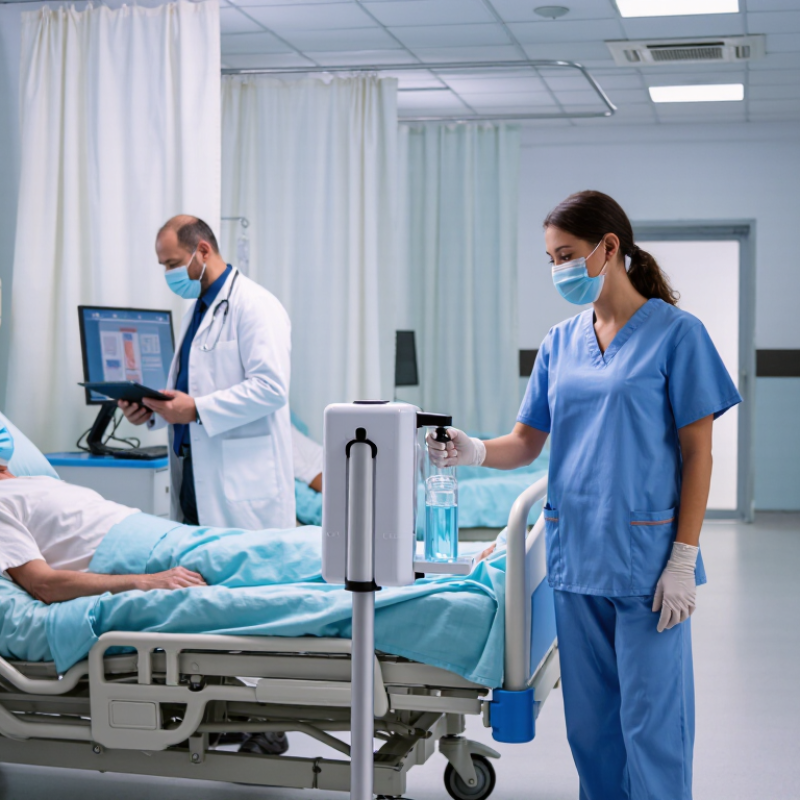
Small details matter. A sanitizer dispenser should be visible before the patient’s bed, not hidden behind a trolley. Staff should know when gloves are needed, and when they create false confidence. Regular audits can reveal gaps, but they may not explain why a rushed clinician skips a step. That weakness deserves honest attention. Perfect compliance is unlikely. Better systems remain possible.

This guide examines practical ways to improve infection prevention in healthcare settings. It considers staff training, environmental controls, surveillance, leadership accountability, and patient participation. The goal is measurable progress: fewer avoidable exposures, faster recognition of outbreaks, and safer care for everyone.
How to Improve Infection Prevention in Healthcare Settings?

Define HAI Burden: WHO Reports 7 in 100 Acute-Care Patients Are Affected

How to Improve Infection Prevention in Healthcare Settings?

The burden of healthcare-associated infections is larger than many patients realize. The World Health Organization reports that about 7 in 100 acute-care patients in high-income countries are affected. In lower-resource settings, the burden can be even higher. These infections may involve surgical wounds, urinary catheters, intravenous lines, or respiratory equipment. Each case can extend hospital stays, increase treatment costs, and create avoidable stress for patients and families.

Prevention begins with reliable daily practice. Staff should clean their hands before and after patient contact, prepare equipment carefully, and review invasive devices every day. A catheter should not remain simply because it is convenient. Wound observations need clear documentation, including redness, swelling, drainage, and temperature changes. Environmental cleaning also matters. A damp bedside table, shared blood-pressure cuff, or poorly disinfected monitor can become part of the transmission chain.

Measurement makes improvement more credible. Infection prevention teams can track rates by ward, procedure, and device use, then discuss results openly with clinical staff. Small audits often expose gaps that formal policies miss. Compliance is rarely perfect. A rushed shift can weaken good habits. That reality deserves attention, not blame. Training should include practical demonstrations, feedback, and opportunities for nurses, doctors, cleaners, patients, and visitors to report concerns. Local data should guide action, while current WHO guidance and national clinical standards provide the professional foundation.

Map Facility Risks: CDC Finds 1 in 31 U.S. Hospital Patients Has an HAI

How to Improve Infection Prevention in Healthcare Settings?

The CDC estimates that one in 31 U.S. hospital patients has a healthcare-associated infection (HAI) on any given day. One in 31. This figure turns infection prevention into a facility-level mapping task, not a general policy exercise. Leaders should compare central-line infections, surgical-site infections, urinary infections, and resistant organisms by ward, procedure, shift, and patient group. A crowded intensive care unit may need different controls than a short-stay surgical floor.

The CDC’s National Healthcare-Associated Infections Progress Report tracks standardized infection ratios across U.S. hospitals. These ratios help teams identify unusual increases, even when raw case numbers appear small.

The World Health Organization reported that about 7 in 100 patients in high-income acute-care hospitals acquire at least one HAI. In lower- and middle-income settings, the estimate rises to about 15 in 100. The difference reflects resources, staffing, surveillance quality, and patient complexity.

Risk maps should include practical details: hand-hygiene access beside each bed, missed cleaning points, isolation-room pressure, and delayed device removal. Review the data weekly with nurses, environmental staff, pharmacists, and physicians. Do not rely only on annual reports. A map is never perfect. Some infections are missed, and documentation varies between units. That weakness deserves attention, not concealment. Small audits, direct observation, and patient feedback can expose gaps that electronic dashboards overlook.

Apply Standard Precautions Through WHO’s Five Moments for Hand Hygiene

How to Improve Infection Prevention in Healthcare Settings?

Standard precautions begin with reliable hand hygiene. The World Health Organization’s Five Moments provide a practical rhythm for safer care. Clean your hands before touching a patient, even during a brief examination. Clean them before a clean or aseptic procedure, such as inserting a catheter or changing a dressing. This step protects vulnerable body sites from microorganisms on your hands.

Clean your hands after a body fluid exposure risk, including removing gloves or handling used equipment. Clean them after touching the patient and after touching nearby surfaces, such as bed rails, curtains, or monitors. Gloves do not replace hand hygiene. In a busy ward, staff may remember patient contact but overlook the surrounding bed space. That small gap can matter. Alcohol-based hand rub works when hands are not visibly soiled. Use soap and water when they are dirty or after certain infectious exposures. Follow the recommended rubbing time and cover fingertips, thumbs, and between the fingers.

Tips: Keep hand rub within easy reach. Pause before every patient contact. Link each action to one of the five moments. Speak up respectfully when a moment is missed. Clean shared devices between patients. Nails should remain short, and hand jewelry can interfere with cleaning. Perfect compliance is difficult. That is not an excuse. It is a reason to observe practice, discuss barriers, and improve the system.

How to Improve Infection Prevention in Healthcare Settings? - Apply Standard Precautions Through WHO’s Five Moments for Hand Hygiene

WHO Hand Hygiene Moment When It Applies Required Hand Hygiene Action Related Standard Precautions Practical Monitoring Indicator
1. Before Touching a Patient Before physical contact with a patient, including routine care, examination, repositioning, or assistance with daily activities. Perform hand hygiene immediately before contact. Use an alcohol-based handrub when hands are not visibly soiled, or wash with soap and water when visible contamination is present.
  • Use clean gloves when contact with blood, body fluids, mucous membranes, or non-intact skin is anticipated.
  • Gloves do not replace hand hygiene.
Percentage of observed opportunities in which hand hygiene was completed before patient contact.
2. Before a Clean or Aseptic Procedure Before handling invasive devices, preparing medication, dressing wounds, inserting or accessing devices, or touching a patient’s mucous membranes or non-intact skin. Clean hands immediately before the procedure. Allow alcohol-based handrub to dry fully, or use soap and water when indicated by visible soiling or local protocol.
  • Prepare a clean work area and use aseptic technique.
  • Use sterile or clean equipment appropriate to the procedure.
  • Disinfect reusable equipment according to approved procedures.
Percentage of observed aseptic procedures preceded by hand hygiene and correct preparation of supplies.
3. After Body Fluid Exposure Risk Immediately after contact with blood, body fluids, secretions, excretions, non-intact skin, mucous membranes, contaminated materials, or used equipment. Perform hand hygiene after removing gloves or other protective equipment. If hands are visibly soiled, wash them with soap and water.
  • Select gloves, gown, mask, and eye protection according to the anticipated exposure.
  • Handle sharps safely and never recap, bend, or break used needles by hand.
  • Contain spills and contaminated waste promptly.
Percentage of exposure-risk events followed by correct removal of PPE and immediate hand hygiene.
4. After Touching a Patient After physical contact with the patient, including examination, treatment, mobilization, or assistance with personal care. Perform hand hygiene immediately after patient contact and before moving to another task or person.
  • Remove gloves and gowns in a manner that avoids contamination.
  • Clean hands even when no visible contamination is present.
  • Keep personal items and clinical materials away from contaminated surfaces.
Percentage of observed patient-contact episodes followed by hand hygiene before the next activity.
5. After Touching Patient Surroundings After contact with objects or surfaces in the patient’s immediate environment, even without touching the patient. Perform hand hygiene after contact with bed rails, bedside tables, monitors, curtains, linen, or other nearby surfaces.
  • Clean and disinfect frequently touched surfaces on a defined schedule.
  • Use dedicated or appropriately reprocessed equipment when required.
  • Transport contaminated items safely for cleaning or disposal.
Percentage of observed environmental-contact episodes followed by hand hygiene before leaving the care area.
Core Standard Precautions That Support All Five Moments
Risk Assessment Before every patient-care activity, assess the likelihood of exposure to infectious material. Select appropriate controls and PPE based on the expected contact, procedure, and exposure risk. Apply hand hygiene, respiratory hygiene, safe injection practices, sharps safety, environmental cleaning, waste management, and safe handling of linen and equipment. Percentage of sampled procedures with PPE and equipment choices appropriate to the documented or observed exposure risk.
Respiratory Hygiene For patients, visitors, and staff with respiratory symptoms such as coughing or sneezing. Promote covering coughs and sneezes, provide tissues and hand hygiene supplies, and offer a mask when appropriate. Maintain separation from others when feasible and follow facility procedures for assessment and referral of symptomatic individuals. Availability of tissues, hand hygiene supplies, masks, and clear respiratory-hygiene instructions at points of entry and care.
Safe Injection and Sharps Practices During preparation, administration, and disposal of injections or other procedures involving sharps. Use aseptic technique, use a new sterile needle and syringe for each injection, and discard sharps immediately into a puncture-resistant container. Keep medication preparation areas clean and separate from contaminated equipment or used materials. Number of observed unsafe injection practices, sharps injuries, or overfilled sharps containers.

Implementation note: Hand hygiene should be performed at the appropriate moment, using the correct technique and sufficient product volume. Alcohol-based handrub is generally preferred when hands are not visibly soiled; soap and water should be used when hands are visibly dirty or when required by local infection-prevention procedures.

Build Multimodal IPC Programs: Hand Hygiene Can Prevent Up to 50% of HAIs

Hand hygiene remains one of the most practical defenses against healthcare-associated infections (HAIs). The World Health Organization reports that effective hand hygiene may prevent up to 50% of avoidable infections. The CDC reports that about one in 31 hospital patients has an HAI on any given day. These figures make every bedside contact significant.

50% of avoidable infections may be prevented through effective hand hygiene.
1 in 31 hospital patients has an HAI on any given day.

A strong infection prevention program needs more than posters near sinks. WHO recommends a multimodal strategy involving reliable water and alcohol-based hand-rub access, staff education, workplace reminders, observation, and feedback. A nurse should find hand rub beside the bed, not across the corridor. Compliance data should be discussed without blame, because fear can hide real problems. Small details matter.

Experience from hospital audits often reveals uncomfortable gaps. Staff may clean their hands before procedures but miss the moment after touching bed rails. Gloves can also create false confidence. They do not replace hand hygiene. Leaders should review supply interruptions, workload pressure, skin irritation, and local compliance patterns. The process will not be perfect. It should remain measurable, visible, and open to correction. WHO’s Guidelines on Hand Hygiene in Health Care and the CDC’s Healthcare-Associated Infections Progress Report provide useful reference points for building safer routines.

Measure Progress with CDC NHSN Surveillance, Audits, and Feedback

Improving infection prevention begins with measurement, not assumptions. CDC’s National Healthcare Safety Network (NHSN) provides standardized data for central-line infections, catheter-associated urinary infections, surgical-site infections, and other events. The 2023 National and State Healthcare-Associated Infection Progress Report recorded a 9% decrease in central-line bloodstream infections and a 10% decrease in catheter-associated urinary infections compared with 2022. These figures show progress, but they also expose uneven performance between facilities.

A practical team reviews NHSN rates every month. Staff compare observed infections with predicted numbers, then examine device days, unit workload, and patient risk. During a morning audit, an observer might check whether a catheter bag stays below bladder level and whether the drainage system remains closed. Feedback should arrive quickly, preferably within 24 hours. A short conversation at the bedside often changes behavior more effectively than a quarterly report.

Audits need structure. Use the same checklist across shifts, including weekends and night duty. That is where our process can fail. Observers may influence behavior, and small samples can create false confidence. Record missed opportunities, not only infection events. Review trends with nurses, physicians, technicians, and cleaning teams. Then test one change, such as removing unnecessary catheters during daily rounds. Measure again through NHSN surveillance and local observations. Reliable improvement requires accurate definitions, complete reporting, and honest discussion when the numbers worsen.

How to read this chart: These national percentage reductions compare standardized infection ratios in 2022 with the 2015 baseline. Regular NHSN surveillance, focused audits, and timely feedback can help healthcare teams identify gaps and sustain improvement. Lower infection ratios indicate better prevention performance.
Source: Centers for Disease Control and Prevention, National and State Healthcare-Associated Infection Progress Report, 2022.

FAQS

What is a healthcare-associated infection risk map?

It shows infection patterns by ward, procedure, shift, and patient group. A crowded intensive care unit may need different controls than a short-stay surgical floor.

Which infections should healthcare teams track?

Track central-line infections, surgical-site infections, urinary infections, and resistant organisms. Compare trends, not only total case numbers. Small increases can signal trouble.

How often should infection data be reviewed?

Review the data weekly with nurses, environmental staff, pharmacists, and physicians. Annual reports arrive too late. Frequent reviews reveal changing risks.

What details belong on a facility risk map?

Mark hand-rub access beside beds, missed cleaning points, isolation-room pressure, and delayed device removal. Patient feedback can reveal gaps that electronic dashboards miss.

When should healthcare workers clean their hands?

Clean hands before touching a patient and before clean or aseptic procedures. Clean them after fluid exposure risks, patient contact, and nearby surface contact.

Do gloves replace hand hygiene?

No. Gloves do not replace hand hygiene. Clean hands before wearing gloves and after removing them. The rule is easy to forget.

What should staff do when hands are visibly dirty?

Use soap and water when hands are visibly soiled or after certain infectious exposures. Use alcohol-based hand rub when hands appear clean. Cover thumbs, fingertips, and finger spaces.

How can facilities improve hand-hygiene compliance?

Keep hand rub within easy reach and pause before every patient contact. Clean shared devices between patients. Speak up respectfully when a missed moment is observed.

What weaknesses can infection-prevention audits reveal?

Direct observation, small audits, and patient feedback can expose missed cleaning or undocumented infections. The map is imperfect. That weakness deserves attention, not concealment.

Conclusion

Healthcare-associated infections remain a major challenge in medical facilities, affecting approximately 7 out of every 100 patients in acute-care settings and about 1 in 31 hospital patients in the United States. These figures demonstrate why infection prevention is critical in healthcare: it protects patients, healthcare workers, and visitors while reducing complications, treatment costs, and avoidable pressure on healthcare systems. Each facility should assess its own risks, considering patient conditions, procedures, equipment, staffing, and environmental factors.

Effective prevention begins with consistent standard precautions, especially hand hygiene at key moments before, during, and after patient care. A successful infection prevention program should combine staff education, reliable supplies, environmental cleaning, appropriate protective equipment, and clear procedures. Strong multimodal strategies may prevent up to half of healthcare-associated infections when applied consistently. Progress should be measured through ongoing surveillance, direct audits, and timely feedback, allowing teams to identify gaps, improve practices, and maintain safer care over time.

Isabella

Isabella

Isabella is a dedicated marketing professional with a sharp focus on driving brand growth and engagement through strategic content creation. With an extensive background in digital marketing, she combines her passion for storytelling with her keen understanding of industry trends to deliver......